
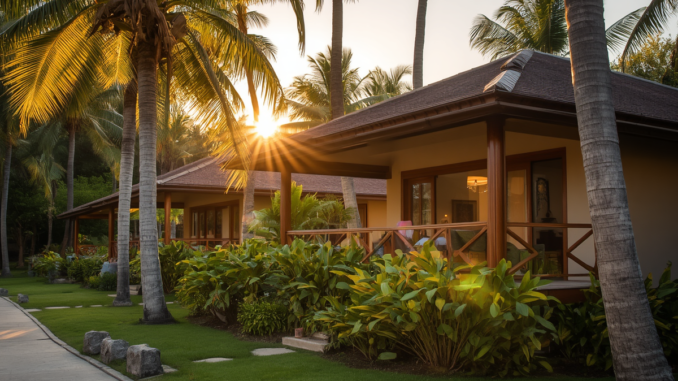
Vacation rental website builder Costa Rica
Choosing a Vacation rental website builder Costa Rica solution involves more than finding an attractive template. A successful rental website must support bookings, explain the property clearly, and make communication simple for travelers.
Additionally, the website should fit the way the rental business already operates. For example, many owners still depend on Airbnb, Vrbo, property management software, or direct inquiries.
Therefore, the website should connect those pieces instead of creating more administrative work.
For Costa Rica properties, several local factors also deserve attention. Bilingual content, WhatsApp, destination SEO, mobile usability, and international guest communication can influence the final setup.
This guide explains how to choose the right platform. It also covers direct booking features, website costs, hiring a professional designer, and several Costa Rica-based professionals worth evaluating.
1. Why Costa Rica Vacation Rentals Need Their Own Website
Airbnb and Vrbo can remain valuable distribution channels. However, an independent website gives a property owner another way to reach guests.
Most importantly, the website becomes a digital asset controlled by the business.
Build a Recognizable Property Brand
An OTA listing follows the marketplace’s structure. Therefore, every property must fit within similar layouts, filters, and page elements.
Your own website works differently.
You control the photography, property descriptions, navigation, destination information, policies, calls to action, and booking flow. Consequently, the website can communicate what makes the rental different.
This matters for Costa Rica properties because location often drives booking decisions.
A guest comparing accommodations in Tamarindo, Nosara, Sámara, Manuel Antonio, or La Fortuna may need detailed local information. For instance, travelers may want to understand transportation, nearby beaches, restaurants, tours, or road conditions.
A well-designed website can answer those questions immediately.
Create Another Path Toward Direct Bookings
An independent website can also support a direct booking strategy.
That does not mean abandoning major travel platforms. Instead, the website adds another acquisition channel.
For example, a former guest may search for the property’s name. A traveler may receive the website through a personal recommendation. Likewise, someone may discover a destination page through Google.
Without an independent site, those visitors may return to an OTA.
With a website, however, they can interact directly with the property brand.
Improve Communication Before the Stay
Travelers often have questions before booking.
They may ask about airport transportation, check-in, internet quality, parking, nearby beaches, accessibility, or activities.
Therefore, the website should answer common questions and provide simple contact options.
Email forms can work well. Additionally, WhatsApp can reduce friction for short questions.
The important goal is clarity.
A guest should understand the property before contacting the owner. As a result, conversations can focus on genuine booking questions instead of basic information.
2. Essential Features for a Direct Booking Website
A standard business website and a vacation rental website have different requirements.
Beautiful photographs are important. However, operational features matter just as much.
Before selecting a platform, I recommend defining the complete guest journey. Specifically, consider what happens from the first page visit until the reservation is confirmed.
Direct Booking or Inquiry System
First, decide how reservations should work.
Some rentals need an instant booking engine. Others prefer an inquiry-based model because each reservation requires personal confirmation.
Both approaches can work.
However, the choice affects the technology you need.
An instant booking system should display available dates, pricing, guest information, booking conditions, and payment steps. Meanwhile, an inquiry system should provide a short and intuitive form.
Avoid unnecessary fields.
Every additional step creates friction. Therefore, request only information that helps process the booking.
Availability Calendar
Travelers usually want to know whether their dates are available.
Consequently, availability should be easy to find.
A clear calendar can prevent visitors from sending unnecessary inquiries. Furthermore, it helps guests make faster decisions.
However, an availability calendar is only useful when the information is reliable.
That becomes especially important when the property appears on several booking channels.
Airbnb and Vrbo Synchronization
If the same rental appears on Airbnb, Vrbo, and an independent website, calendars must stay aligned.
Otherwise, a direct reservation could overlap with an OTA booking.
For smaller operations, calendar feeds may be enough. In contrast, larger portfolios may benefit from property management software or a channel manager.
Therefore, do not choose the booking setup only by appearance.
Reliability matters more.
Online Payment Options
Direct booking often requires a payment process.
Before choosing a platform, examine how it handles deposits, balances, refunds, currencies, processing fees, and confirmations.
Additionally, check who controls the payment account.
The website should make the transaction understandable for guests. Likewise, property owners should have a clear record of each reservation.
Mobile Usability
Travelers frequently browse accommodations from their phones.
Therefore, every important page should work well on small screens.
Test menus, galleries, calendars, forms, booking widgets, maps, and payment pages.
Additionally, make buttons large enough for mobile use.
A responsive design should not simply shrink the desktop page. Instead, it should create a comfortable mobile booking experience.
3. Features That Matter Specifically in Costa Rica
When evaluating a Vacation rental website builder Costa Rica setup, local context deserves special attention. Generic website features may not cover every need of a tourism business serving both domestic and international travelers.
Therefore, the platform should support the realities of the local market.
English and Spanish Content
Bilingual content can be valuable for many rental businesses.
English can serve international tourists. Meanwhile, Spanish supports domestic travelers, regional visitors, local partners, and property staff.
However, adding another language creates maintenance responsibilities.
For example, prices, policies, check-in instructions, and property details must remain consistent across both versions.
Therefore, avoid creating translations that quickly become outdated.
A smaller bilingual website with accurate information is usually better than a large site with inconsistent pages.
If WordPress is being considered for a bilingual build, this guide to WordPress designers in Costa Rica provides additional context on WordPress projects, responsive design, technical requirements, and selecting local specialists.
WhatsApp Integration
WhatsApp can provide a simple contact route for prospective guests.
For example, a traveler might want to confirm transportation or ask a quick question about the property.
A visible WhatsApp button can help.
However, it should complement the booking system rather than replace it.
Important reservation details should still pass through a structured process. Consequently, dates, payments, guest details, and policies remain easier to manage.
Destination-Focused SEO
Costa Rica is not one single travel market.
Travelers often search by destination, beach, region, activity, or property type.
Therefore, a rental website can benefit from useful local pages.
For instance, a property near Tamarindo can explain nearby beaches, dining, transportation, activities, and neighborhood characteristics.
Likewise, a rental near Nosara can create content relevant to that area.
The goal is not simply inserting location keywords.
Instead, answer real travel questions.
That approach creates better content for users while also expanding the website’s organic search coverage.
For a broader explanation of SEO-friendly site structure, local visibility, and website architecture, see this guide to Costa Rica web design and SEO.
Support for One Property or Many
A single villa needs a relatively simple structure.
For example, it may need a homepage, property page, gallery, availability, location information, FAQs, and booking page.
A property manager may need much more.
Multiple rentals can require search filters, individual property pages, centralized calendars, booking management, and destination categories.
Therefore, choose software that matches both current needs and expected growth.
4. General Website Builders vs. Vacation Rental Software
There is no universal platform that fits every rental.
Instead, the best technology depends on the operation.
A general website builder focuses primarily on page creation and design. Specialized vacation rental software focuses more heavily on bookings and property operations.
A professionally designed website offers another route.
General-Purpose Website Builders
General platforms usually offer extensive control over page layouts.
Therefore, they can work well for content-heavy websites.
They are useful for destination pages, blogs, landing pages, galleries, and brand storytelling.
WordPress is one example of a flexible CMS approach. However, booking functionality often requires external tools, plugins, or specialized integrations.
Before committing, check how availability, reservations, payments, and calendar synchronization will work.
Additionally, calculate the cost of required integrations.
A cheap website subscription can become expensive after adding several external services.
Specialized Vacation Rental Platforms
Vacation rental software often includes industry-specific features.
For example, a platform may combine booking tools, calendars, property pages, guest management, and channel-related functionality.
Consequently, the setup can become simpler.
However, specialized systems may offer less design freedom.
They can also impose limits on content structure or advanced SEO customization.
Therefore, evaluate both operations and marketing.
A strong booking engine is useful. Nevertheless, the website also needs enough flexibility to promote the property effectively.
Custom and Professionally Built Websites
A custom website becomes attractive when standard templates cannot support the project.
For example, a luxury rental brand may need several destinations, custom booking integrations, multilingual content, or a unique visual identity.
A professional designer can also manage technical decisions for the owner.
That can reduce the learning curve considerably.
For related tourism website considerations, the guide to boutique hotel web design in Costa Rica covers hospitality-oriented booking flows, property presentation, mobile usability, and direct reservation design.
However, custom work requires careful planning.
The client should define ownership, hosting, maintenance, integrations, support, and future editing before development starts.
Consequently, a detailed project brief becomes essential.
5. DIY Builder vs. Specialized Rental Platform vs. Professional Designer
The three main approaches solve different problems.
Therefore, choosing between them should depend on the property’s business model rather than personal preference alone.
| Option | Best For | Main Advantages | Main Limitations | Typical Booking Setup | SEO Flexibility |
|---|---|---|---|---|---|
| DIY website builder | One property, smaller budgets, hands-on owners | Lower initial cost, quick setup, direct editing control | More manual setup, integrations may require extra tools | Plugin, widget, inquiry form, or external booking engine | Usually good, but depends on platform |
| Specialized rental platform | Active hosts, multi-channel rentals, growing portfolios | Booking tools, calendars, property management features, channel connectivity | Less creative freedom, platform dependency | Native booking engine or PMS connection | Moderate to good, depending on platform |
| Professional designer | Premium properties, custom brands, complex integrations | Custom UX, stronger branding, tailored SEO structure, integration planning | Higher initial investment, requires clear project scope | Custom integration, PMS, booking engine, or tailored workflow | Potentially very strong |
When a DIY Builder Makes Sense
A DIY approach can work well for one property.
It is particularly practical when the owner is comfortable managing content and technical settings.
For example, a simple villa website may only need several pages, a calendar, an inquiry form, and a clear booking button.
In this situation, paying for extensive custom development may not be necessary.
However, calculate the full setup.
Plugins, booking tools, premium themes, hosting, maintenance, and payment services can increase the real cost.
When a Specialized Platform Makes Sense
A specialized rental platform becomes more attractive as booking complexity increases.
For example, an owner may list the same property across Airbnb, Vrbo, and direct channels.
Calendar synchronization then becomes more important.
Likewise, a property manager handling several rentals may need centralized availability, automated messages, guest records, and reporting.
In these cases, operational efficiency can matter more than unlimited design flexibility.
When Hiring a Professional Designer Makes Sense
A designer becomes particularly valuable when the website is expected to function as a serious sales channel.
Luxury villas, property management companies, boutique accommodation brands, and multi-property portfolios may benefit from custom UX.
A professional can also coordinate design, WordPress, booking integrations, SEO architecture, mobile optimization, and analytics.
Therefore, the value is not simply making the website look better.
The real value is reducing the gap between branding, marketing, and booking operations.
A Simple Decision Rule
Choose a DIY builder when simplicity and budget matter most.
Choose specialized rental software when reservation management matters most.
Choose a professional designer when branding, SEO, custom functionality, or integration quality matter most.
In some cases, the strongest solution combines the last two.
For example, a designer may build the public-facing website while connecting it to specialized vacation rental software behind the scenes.
6. How to Choose the Right Website Setup
Choosing technology first is often inefficient.
Instead, define the requirements before comparing platforms.
This method makes product comparisons much easier.
Start With the Number of Properties
First, identify how many rentals the website must support.
One property usually requires simple navigation.
Ten properties create very different needs.
For example, users may need to filter rentals by location, guests, bedrooms, availability, or amenities.
Additionally, each property needs accurate booking information.
Therefore, growing businesses should plan for scalability early.
Define the Booking Process
Next, decide whether reservations will be instant or inquiry-based.
Then document every step.
For instance, determine how guests choose dates, receive prices, accept policies, pay deposits, and receive confirmation.
This exercise often reveals hidden requirements.
Consequently, you can reject platforms that do not support the actual workflow.
Evaluate SEO Flexibility
A vacation rental website should support more than property listings.
Useful destination content can attract potential guests earlier in the planning process.
Therefore, look for control over headings, page titles, URLs, internal links, images, and content.
Additionally, ensure new pages can be created without developer intervention.
That flexibility becomes important as the SEO strategy expands.
Consider the Complete Cost
Do not compare platforms using only the advertised monthly price.
Instead, consider the entire system.
Costs may include the website platform, domain, hosting, booking software, payment processing, plugins, maintenance, professional design, photography, and SEO.
Furthermore, owner time has value.
A DIY setup may look inexpensive but require substantial management.
On the other hand, a sophisticated rental platform may be unnecessary for one small property.
Therefore, compare total requirements rather than feature counts.
7. How to Hire a Web Designer in Costa Rica
Sometimes the best website solution is not a DIY tool.
A professional designer can be useful when the booking process is complex, the brand needs a custom presentation, or the owner simply does not want to manage development personally.
For a deeper hiring framework, I recommend the guide Web Designers Near Me in Costa Rica. It covers areas such as portfolios, mobile responsiveness, technical SEO, communication, local requirements, and selection criteria.
When hiring someone for a Vacation rental website builder Costa Rica project, I would focus on evidence rather than promises.
Review Relevant Portfolio Work
A portfolio should demonstrate more than visual taste.
Look at real websites.
Specifically, check mobile layouts, navigation, loading behavior, calls to action, forms, and content structure.
Furthermore, prioritize related industries.
Travel, hotels, vacation rentals, tourism, real estate, and booking-based businesses can require similar user journeys.
However, exact industry experience is not mandatory when the designer demonstrates strong UX and technical skills.
Ask About Booking Integrations
Do not assume every web designer understands vacation rental systems.
Instead, explain your current tools.
Mention Airbnb, Vrbo, your PMS, calendar system, payment provider, or booking software.
Then ask how those systems will interact with the website.
A clear answer is more valuable than a long list of design tools.
Evaluate SEO Knowledge
The website should have a logical heading structure and strong mobile usability.
Additionally, the designer should understand metadata, internal linking, page performance, redirects, and indexable content.
Ask how location and destination pages will be structured.
Also ask whether you can edit SEO content without needing development help each time.
Define Ownership Before Paying
Clarify who controls the domain, hosting account, website files, analytics, plugins, and administrative access.
Furthermore, document what happens after launch.
Ask about backups, updates, maintenance, security, revisions, and support.
This prevents confusion later.
Prepare a Clear Brief
Give the designer a practical list of requirements.
Include the number of properties, languages, booking process, integrations, required pages, brand materials, photographs, and desired launch scope.
Additionally, provide examples of websites you like.
A stronger brief usually leads to more accurate proposals.
8. Recommended Web Designers and Web Professionals in Costa Rica
For owners who prefer professional help instead of building everything themselves, the following four Costa Rica-based profiles are worth evaluating.
These professionals have different areas of focus. Therefore, compare their demonstrated skills against the needs of the project before hiring.
1. Josue Baldizon
Josue Baldizon presents himself as a web designer based in San José, Costa Rica. His website highlights WordPress development, UI/UX, brand design, digital strategy, and SEO-oriented website development.
His portfolio also includes a WordPress travel agency project built around travel packages and booking flows. Therefore, that project is especially relevant when evaluating experience connected to travel websites.
Consider this profile if: you need WordPress, UX, branding, web development, and conversion-focused design within one project.
2. Alejandro L.
Alejandro L. has a Costa Rica-based Workana profile.
Workana currently categorizes the profile under Design & Multimedia.
Therefore, I would evaluate this profile particularly when visual presentation and multimedia work are important.
For a vacation rental business, that could be relevant for property presentation, visual assets, or multimedia elements.
However, confirm WordPress, booking-system, SEO, and development requirements directly before hiring.
Consider this profile if: multimedia and visual execution are important parts of the project.
3. Felipe F.
Felipe F. also has a Costa Rica-based Workana profile.
Workana currently categorizes the profile under IT & Programming.
That can make the profile relevant for websites with a stronger technical component.
For example, a vacation rental project may require custom functions, integrations, troubleshooting, or development work.
Nevertheless, confirm experience with your specific CMS, booking software, or PMS before starting.
Consider this profile if: technical development or programming is an important part of the build.
4. Xenia B. B. C.
Xenia B. B. C. has another Costa Rica-based profile on Workana.
The platform currently categorizes the profile under Design & Multimedia.
Consequently, this is another profile worth reviewing when visual design is an important part of the website.
As with any freelancer marketplace, request relevant portfolio examples before hiring.
Additionally, confirm who will manage development, booking integration, mobile optimization, and technical SEO.
View Xenia B. B. C. on Workana
Consider this profile if: you need design and multimedia support and the current portfolio matches your property’s visual direction.
How to Compare the Four Options
Do not choose only from profile descriptions.
Instead, send each suitable candidate the same project brief.
Ask for relevant work examples, recommended technology, expected deliverables, revision terms, ownership details, post-launch support, and booking-integration experience.
Furthermore, ask them to explain how they would handle mobile visitors.
For rental properties, guests often move quickly between photography, availability, location information, and booking.
Therefore, the designer should understand the complete user journey.
Price matters, but scope matters more.
A lower proposal may exclude important functionality. Conversely, a higher proposal may include strategy, integrations, testing, SEO setup, and support.
Compare like with like.
9. How to Build the Direct Booking Website
Once the platform or designer is selected, build the website around guest decisions.
Do not begin with decorative details.
Instead, map the information a traveler needs before booking.
Choose a Clear Domain
Use a domain that is easy to remember.
If the property already has a recognizable brand, keep the same naming wherever possible.
Consistency helps former guests find the website again.
Furthermore, it makes the address easier to share through email, social media, and WhatsApp.
Build Complete Property Pages
A property page should quickly answer essential questions.
Include guest capacity, bedrooms, bathrooms, amenities, photographs, location information, availability, and booking options.
Additionally, explain what makes the stay distinctive.
Travelers should not need to open several pages to understand the basic offer.
Add Strong Photography
Accommodation is highly visual.
Therefore, image quality matters.
Show bedrooms, bathrooms, social areas, exterior spaces, views, pools, kitchens, workspaces, and relevant amenities.
However, optimize image sizes.
Large uncompressed photographs can damage mobile performance.
Consequently, visual quality and page speed should be balanced.
Connect Availability
Next, make availability easy to find.
Use clear calls to action such as “Check Availability” or “Book Now.”
Additionally, test what happens when selected dates are unavailable.
The user should receive helpful feedback rather than reaching a dead end.
Configure Booking and Payments
Test every stage of the reservation process.
Check pricing, guest information, policies, confirmation messages, payment handling, and owner notifications.
Furthermore, test failed or interrupted transactions.
The goal is to understand the guest experience before real customers use it.
Synchronize Other Channels
If the property remains on Airbnb or Vrbo, connect availability correctly.
Then test synchronization before promoting direct bookings.
This step is crucial.
A visually impressive website cannot compensate for conflicting reservations.
Add Contact Options
Provide an easy path for travelers who still have questions.
Email, a contact form, and WhatsApp can all play a role.
However, avoid overwhelming the visitor with too many competing buttons.
Choose a clear primary action.
Then make secondary contact methods available when needed.
10. How to Generate More Direct Bookings
Publishing a website does not automatically create traffic.
Therefore, owners need a realistic acquisition strategy.
SEO can become one part of that strategy.
Returning guests, social media, referrals, email, partnerships, and branded searches can also contribute.
Optimize Property Pages First
Start with the pages closest to revenue.
Property pages should contain clear descriptions and useful details.
Furthermore, they should target the property and location naturally.
Avoid keyword stuffing.
Instead, write for travelers who are actively comparing accommodation.
Create Useful Destination Content
Travelers often research the destination before choosing a rental.
Therefore, create pages that answer real planning questions.
Topics may include local beaches, transportation, restaurants, activities, family travel, surfing, remote work, or day trips.
However, publish only content relevant to the property.
A useful local guide can strengthen both the visitor experience and SEO.
Make Direct Booking Obvious
Do not hide the main conversion action.
A guest who is ready to reserve should immediately understand the next step.
Therefore, use consistent booking buttons.
Additionally, repeat them at logical decision points.
This approach is usually better than filling every screen with aggressive calls to action.
Encourage Repeat Discovery
Former guests are valuable because they already know the property.
Therefore, make the official website easy to remember.
Use a clear domain and consistent brand identity.
Additionally, include the website in appropriate post-stay communication.
The goal is simple: returning guests should be able to find the property directly.
11. Common Mistakes to Avoid
A rental website can look professional while still creating operational problems.
Therefore, review the complete system before launch.
The following mistakes deserve particular attention.
Choosing Design Before Functionality
A template can influence the purchase decision too early.
Instead, identify booking requirements first.
Then choose the design.
A beautiful homepage has limited value when guests cannot check availability.
Using Disconnected Calendars
Manual calendar management becomes risky as distribution grows.
Therefore, test every synchronization method.
Document how long updates take and what happens when a booking arrives.
Reliable availability protects both the business and the guest.
Ignoring Mobile Booking
Desktop design reviews can hide mobile problems.
Consequently, test the full website on real phones.
Check forms, calendars, galleries, buttons, pop-ups, and checkout pages.
Additionally, review slower connections where possible.
Publishing Weak Location Pages
Creating dozens of nearly identical destination pages is not a strong strategy.
Instead, publish fewer pages with better information.
Each location page should have a clear reason to exist.
For instance, explain transportation, attractions, distances, and who the area suits.
Failing to Define Website Ownership
This becomes especially important when hiring a designer.
The owner should know who controls the domain, hosting, website administration, analytics, and external services.
Therefore, document access before launch.
Additionally, keep important credentials in a secure owner-controlled system.
Choosing a Professional Only by Price
Website proposals can include very different deliverables.
Therefore, compare scope before comparing totals.
One proposal may include only design.
Another may include development, booking integration, mobile testing, SEO setup, analytics, training, and maintenance.
Consequently, the cheapest quote is not automatically the lowest-cost solution.
How Much Does a Vacation Rental Website Cost?
There is no universal cost because rental websites vary significantly.
A basic single-property website is very different from a multi-property booking platform.
Therefore, estimate the project from its requirements.
A DIY site may include a website subscription, domain, booking service, and payment fees.
A professionally built project can also include design, development, content, SEO, integrations, photography, and maintenance.
Furthermore, specialized rental software may bundle several functions together.
That can simplify costs.
However, always examine what remains outside the package.
For example, payment processing or premium integrations may have separate charges.
I also recommend considering internal time.
Owners who build everything themselves may save cash but spend many hours learning and maintaining the system.
Meanwhile, professional services shift more work to the designer or developer.
Neither approach is automatically superior.
The correct choice depends on budget, complexity, time, and business value.
Is a Direct Booking Website Worth It?
A direct booking website can be valuable when it supports a broader strategy.
It gives the property owner more control over branding, content, guest communication, and the customer journey.
Furthermore, it can create an independent destination for returning guests and referrals.
However, the website should not be treated as automatic booking generation.
It still needs visitors.
Therefore, traffic acquisition should be considered during planning.
SEO, referrals, branded searches, social media, local partnerships, and previous guests can all contribute.
The website becomes the place where that demand is converted.
For a single property, keep the system simple.
For a growing portfolio, choose technology that can scale.
In both cases, prioritize reliability before unnecessary complexity.
Frequently Asked Questions
What Should a Costa Rica Vacation Rental Website Include?
At minimum, include strong property information, quality photographs, mobile-friendly design, availability, clear contact options, and a booking or inquiry process.
Additionally, destination information can help international travelers understand the location.
Do I Still Need Airbnb If I Have My Own Website?
Not necessarily, but many properties can use both.
OTAs can provide distribution, while an independent website provides more control over branding and direct guest relationships.
Therefore, the channels do not have to be mutually exclusive.
Can My Website Synchronize With Airbnb and Vrbo?
Many vacation rental tools support calendar synchronization.
However, the method varies.
Therefore, confirm how your selected platform manages availability before launching direct reservations.
Should the Website Be Available in English and Spanish?
That depends on the target audience.
A bilingual website can make sense for properties serving international and domestic travelers.
However, maintain both languages carefully.
Outdated translations can create confusion.
Should I Use WordPress for a Vacation Rental Website?
WordPress can provide extensive control over design, content, and SEO.
Additionally, it supports a large ecosystem of third-party tools.
However, booking functionality usually depends on plugins or external systems.
Therefore, evaluate the complete setup rather than choosing the CMS alone.
Should I Hire a Costa Rica-Based Web Designer?
A local designer can be useful when regional communication, local market understanding, or in-country collaboration matters.
However, location alone does not demonstrate quality.
Review relevant work, technical skills, communication, project scope, and ongoing support before hiring.
What Should I Ask a Web Designer Before Hiring?
Ask which technology they recommend and why.
Additionally, discuss booking integrations, mobile optimization, SEO, ownership, hosting, maintenance, security, revisions, and support.
Request relevant portfolio examples.
Finally, confirm exactly what the proposal includes.
Can One Website Support Several Vacation Rentals?
Yes.
However, multi-property websites usually require a more sophisticated structure.
For example, guests may need filters, individual availability, separate property pages, and centralized booking management.
Therefore, choose the platform with future growth in mind.
How Do I Get Direct Bookings Through Google?
Start with useful, indexable property and destination pages.
Then improve mobile performance, page structure, internal relevance, and content quality.
Additionally, build brand recognition outside Google.
SEO works better when the website also earns repeat visits and referrals.
Is a Custom Website Better Than a Website Builder?
Not automatically.
A website builder may be ideal for a straightforward property.
Meanwhile, custom development can make sense when the business needs unique design, advanced integrations, or a more complex booking experience.
The correct solution depends on the project.
Conclusion
A good vacation rental website should do more than display attractive photos. It should explain the property, reduce uncertainty, simplify communication, and support the actual reservation process.
Therefore, start by defining the booking workflow.
Then evaluate calendars, payments, mobile design, channel synchronization, multilingual content, SEO, and communication tools.
If a standard platform can handle those requirements, a DIY approach may be enough.
However, a professional designer can be valuable when the project requires custom integrations, stronger branding, or a more tailored guest experience.
In that case, review real portfolios and ask detailed technical questions. Additionally, compare professionals based on project fit rather than profile descriptions alone.
Ultimately, the right Vacation rental website builder Costa Rica strategy combines suitable technology with clear content, reliable booking processes, useful supporting resources, and a strong user experience. Build around the guest first, then choose the platform or professional that can support that journey without unnecessary complexity.

Leave a Reply